
Another fish kill at Menindee Lakes after Unprecedented Heatwave, February 2026, + context
: Photography and words from the ground

I have been researching and photographing fish kills at Menindee Lakes, along the Baaka-Darling River system, for six years.
I live in Broken Hill, 1000km west of Sydney in the arid hinterland of western NSW. Broken Hill is only an hour’s drive from the Baaka-Darling River at Menindee. The Baaka is Australia’s third longest river and the heart of the Murray-Darling Basin, one of the world’s most complex and contested river basins.
Out here the people’s war for water has a long and storied history.
For Barkindji people, the Traditional Owners of the river and lakes, and whose Country extends along its length, the Baaka is their literal lifeblood. Hundreds of generations of Barkindji people have been born, raised and buried on its banks, and for them Baaka is ngamaka or ‘mother’. The name Barkindji comes from their word for river, ‘Baaka’, and means ‘people belonging to the river’.
For ‘Hillites’ (like me), the river and lakes are an extended backyard, where fishing, camping, water skiing and bush walks create wholesome weekends away from town. The incredible freshwater ecosystem of the Menindee Lakes is home to an abundance of bird life, more than 200 species, some migrating from as far as Siberia, where they breed, feed and rest. For native fish the lakes are a nursery, where fingerlings arriving in flood waters are safe and well fed, migrating away from the lakes and throughout the Murray-Darling Basin when they’re mature. Menindee Lakes is the womb of the Murray-Darling Basin.
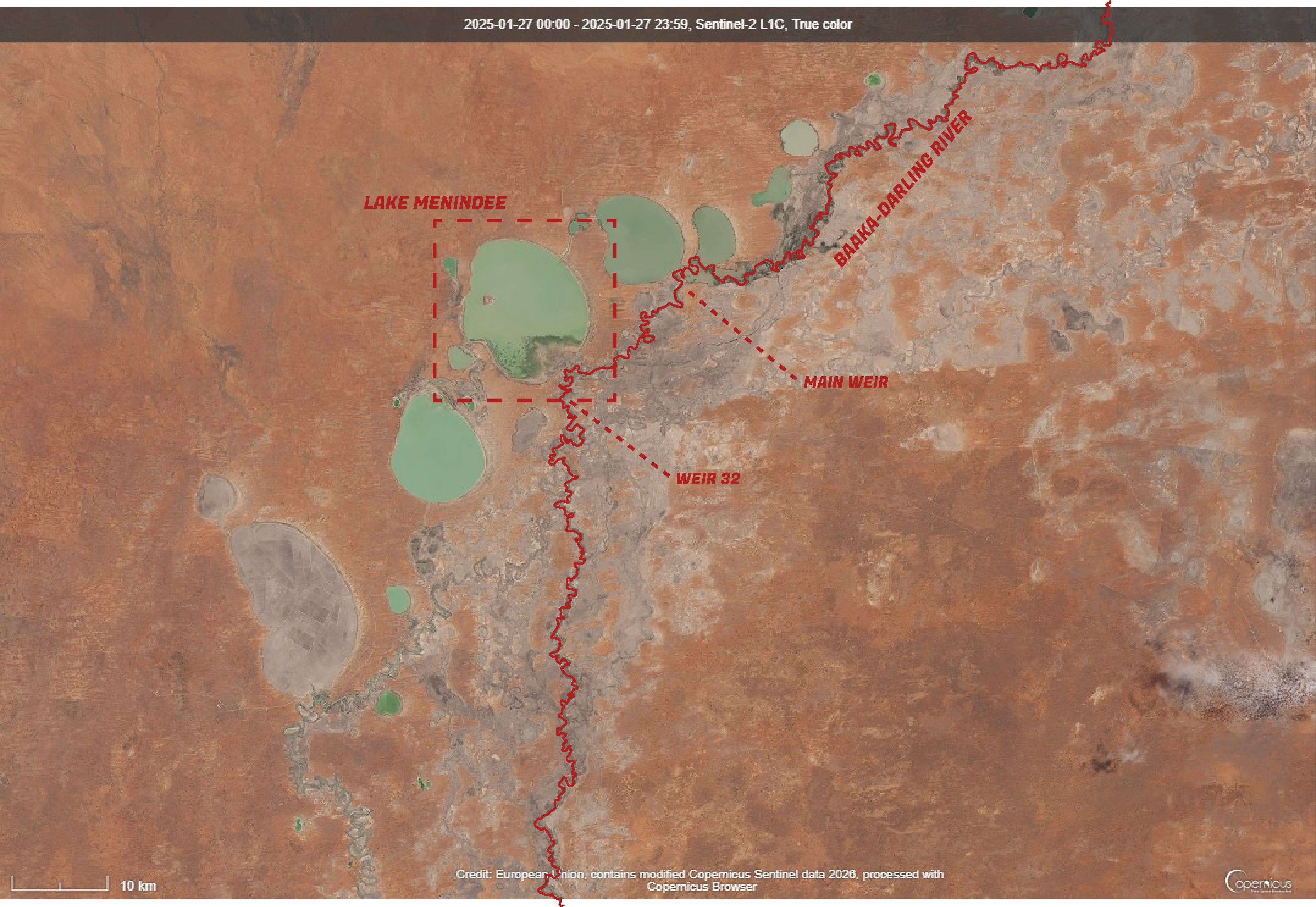
Yesterday’s fish kill was seen on the shores of Lake Menindee, the largest water body among the lakes, collectively known as Menindee Lakes, or ‘wontanella’ to Barkindji, meaning ‘place of many waters’.
The Menindee Lake System is intermittently aquatic. The ecosystem is supposed to wet and dry from the highly variable flows in the Baaka - that’s what makes the system so abundant. Flooding from upstream flows inundate the dry lakes, which are covered in plants and full of spiders and insects which hide in the cracked claypan. When wetted, these dry areas are abundant with food and habitat for aquatic animals like young fish, taking advantage of the easy tucker. Then when water recedes during low flow periods, the fish and aquatic animals move into the main river channel and the cycle repeats and repeats.
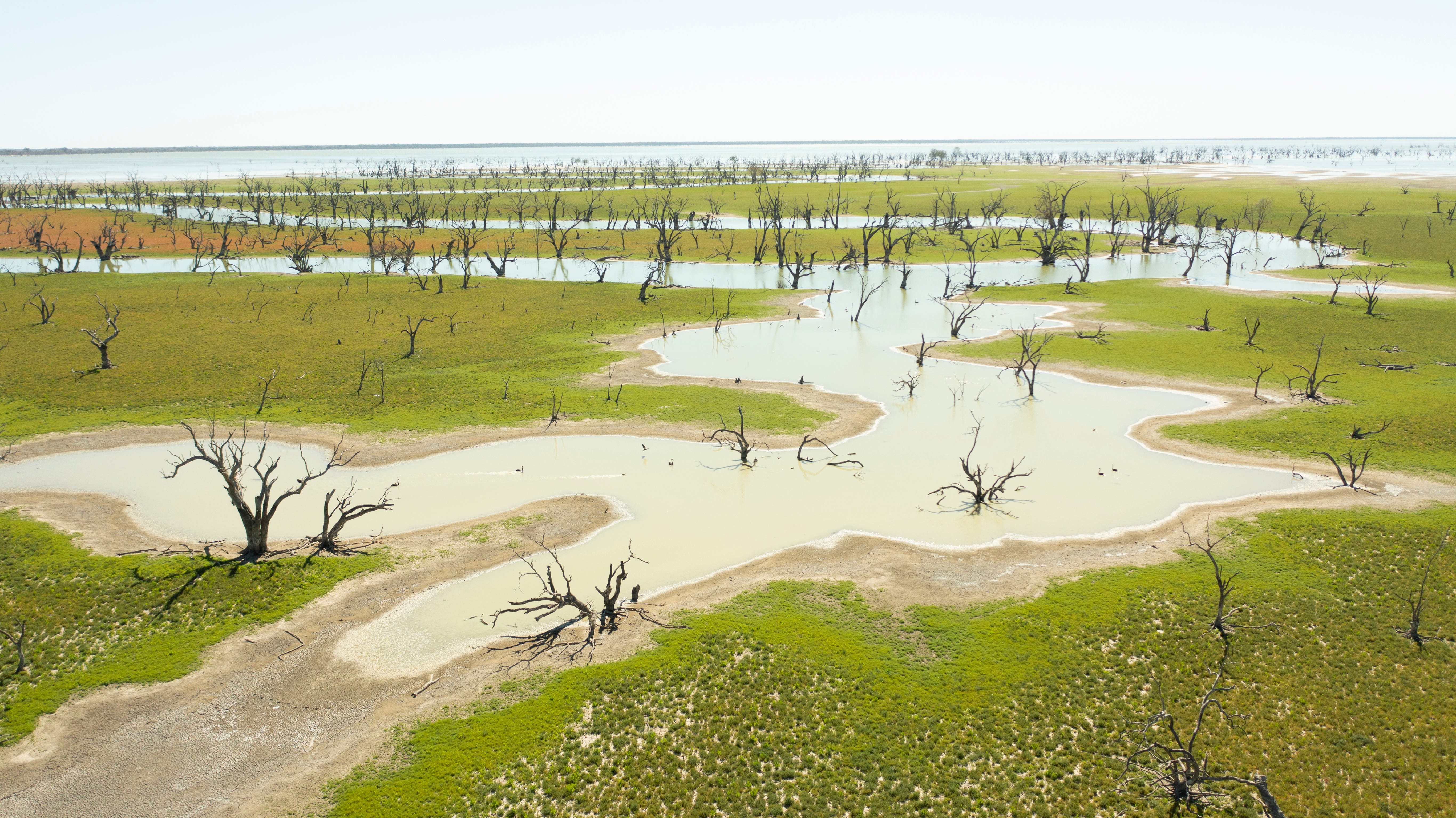
That was how it worked before the Menindee Lakes Scheme (known as ‘the Scheme’) was constructed in the 1950s and 1960s, which dammed the lakes and main river channel with gated weirs, and dug channels to allow water authorities to control flows between the various lakes. This along with upstream water extractions for irrigated crops have drastically changed the quantity, quality and timing of flows into Menindee Lakes.
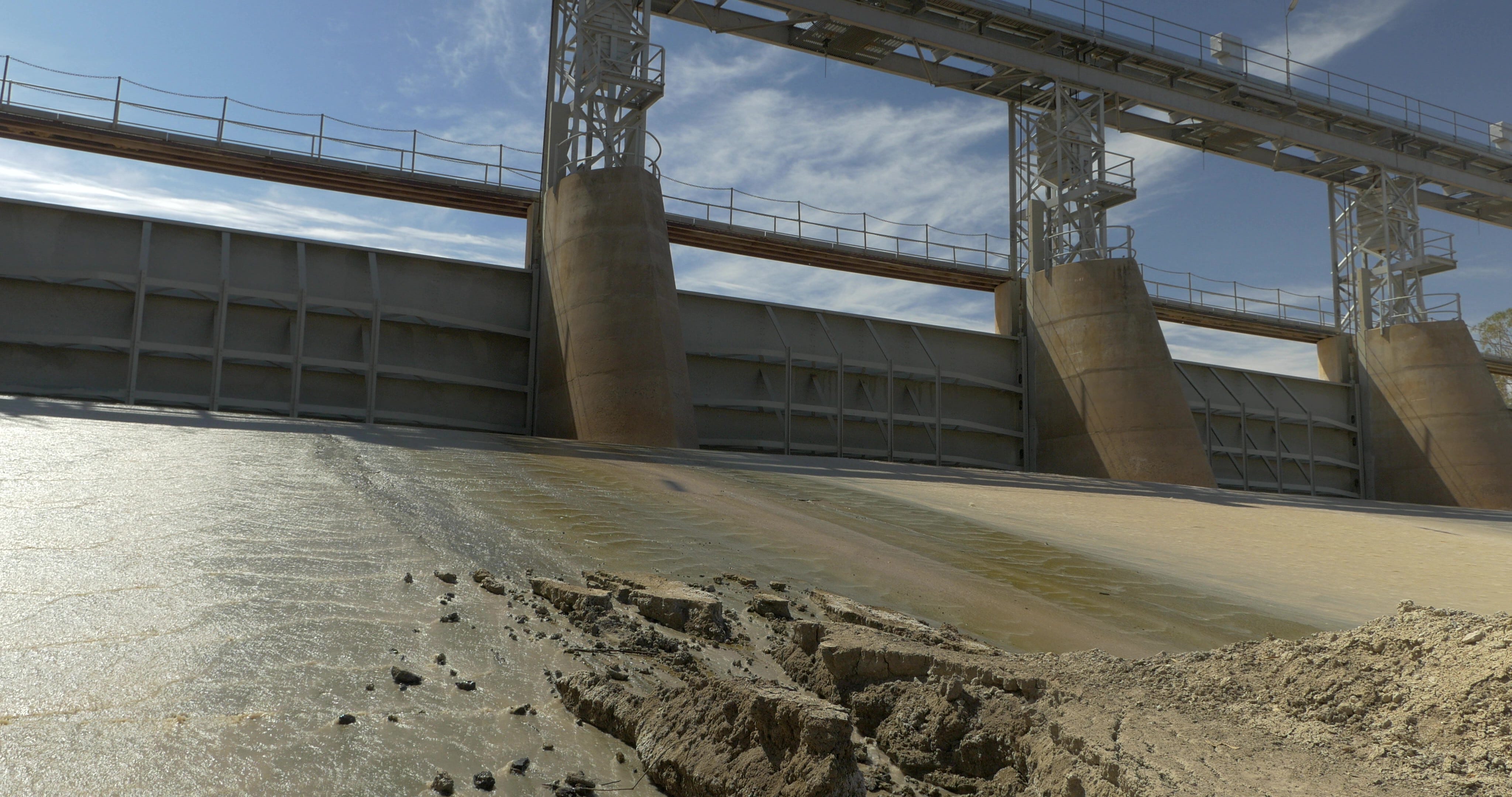
Ever since the 1960s too much water and too little water in Menindee Lakes has impacted the lakes’ delicate balance of wetting and drying, ultimately harming the fundamental building blocks of this wetland ecosystem.
Recently, fish kills along the stretch of the Baaka between Weir 32 and Main Weir have been unprecedented in scale. The last fish kill I photographed was in 2023 when an estimated 20-30 million fish, predominantly Bony Bream/Nhaampa, went belly up.
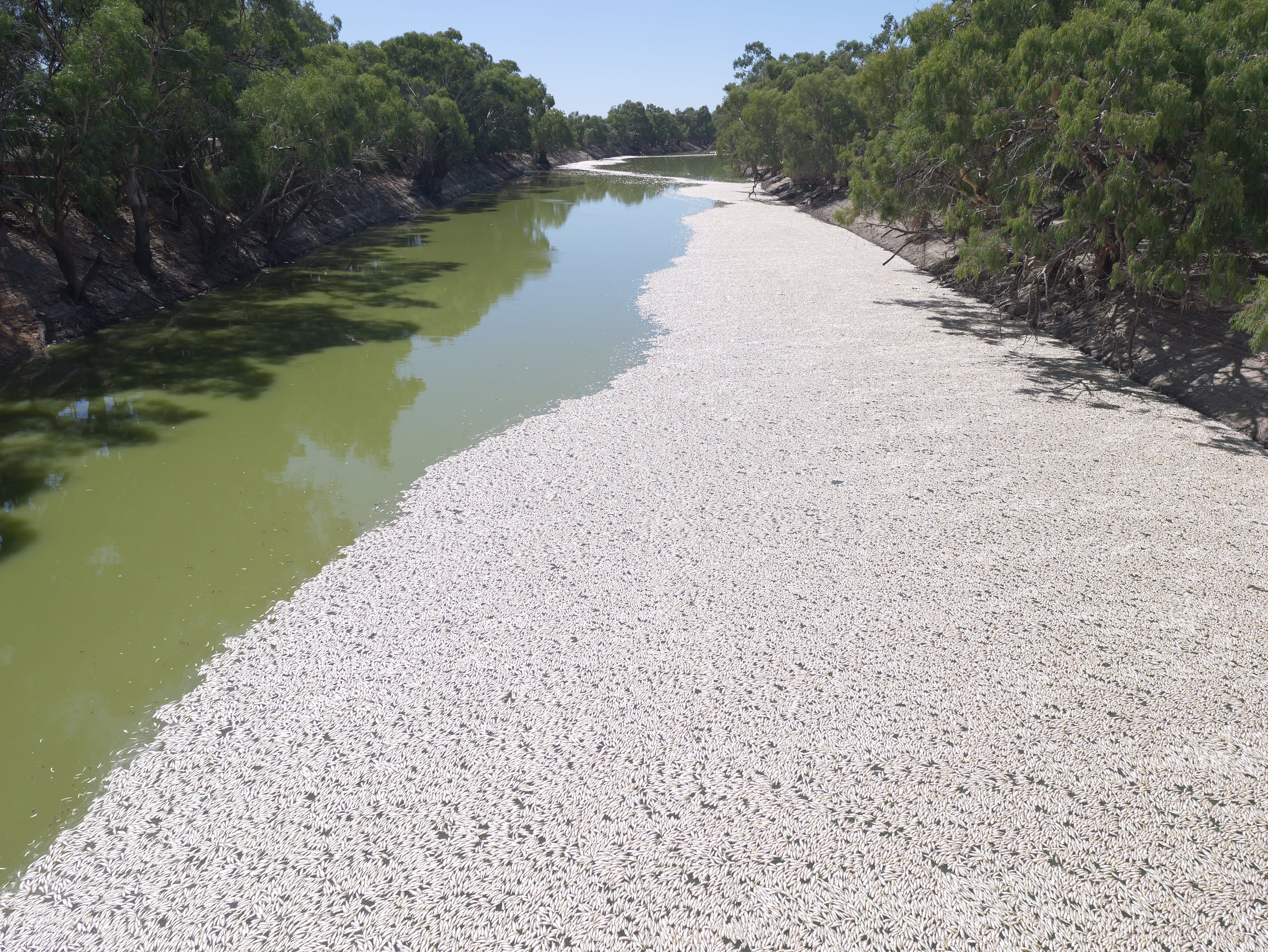
After the Baaka flooded in 2022, high levels of floodplain nutrient washed from the floodplains into the river channel, creating a massive slug of hypoxic blackwater which killed the Bonys trapped by the Main Weir at Menindee Lakes in March 2023. The movement of floodplain nutrient into the river channel, and then into Menindee Lakes, is an important ecological process. The river is supposed to connect to its floodplain during floods, both collecting and distributing nutrients across the system. However, too much nutrient, especially if the floodplains haven’t seen water in a long time, is disastrous.
In the immediate aftermath of the 2023 fish kill, water agencies declared the event “natural” and claimed that “very few operational steps” could have avoided the kill.
This came after previous fish kills in 2018/2019 had sounded the alarm about how poor water quality, extreme weather events, upstream over-extraction and poorly planned water infrastructure projects had all played a role in the deaths of over one million native fish.
With this in mind I began my journey out to Menindee on Tuesday to photograph yet another kill.
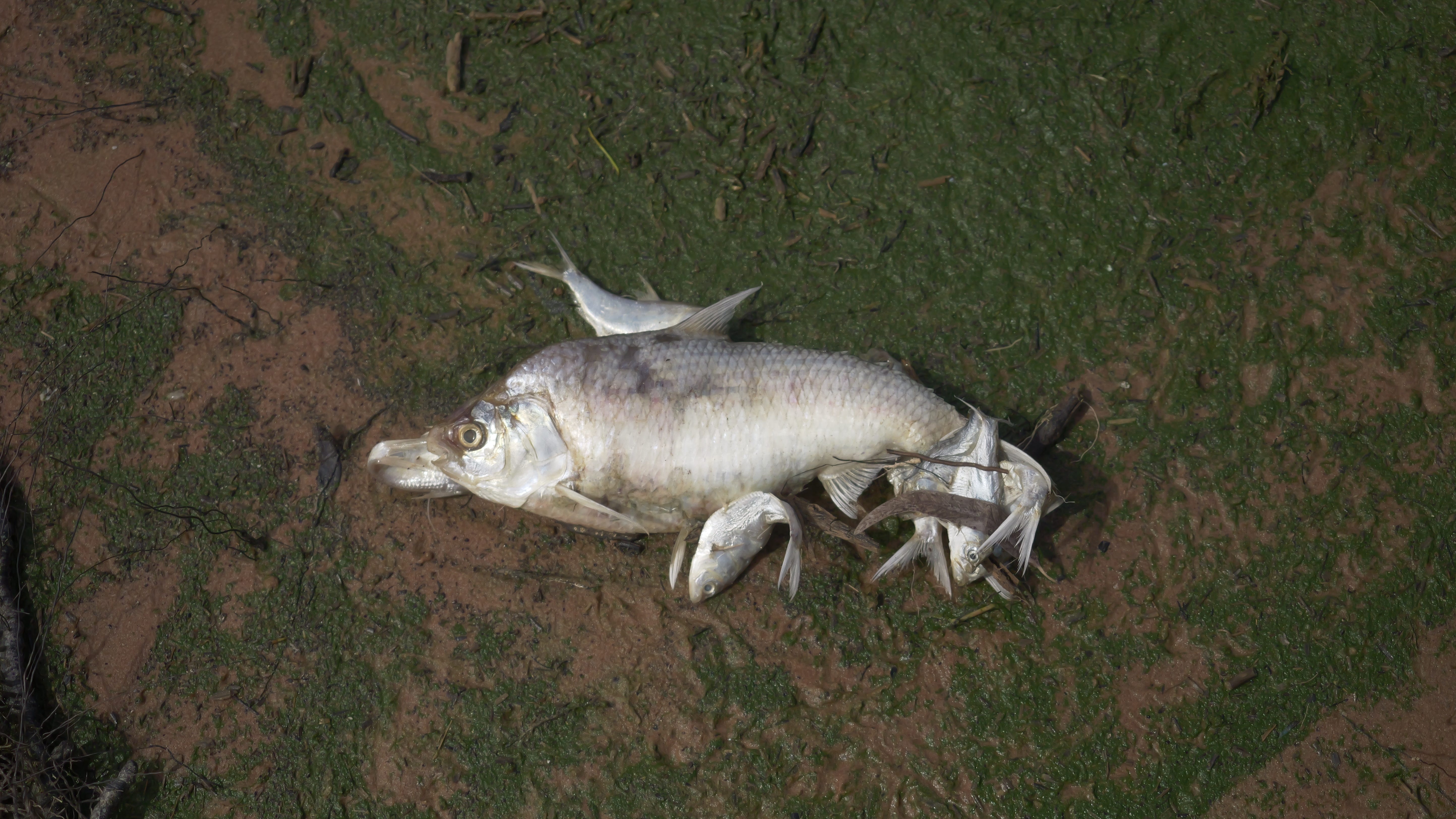
The fish kill at Lake Menindee was observed by a Sunset Strip resident on Monday 2/2/2026 at around 16:00, and images were posted to Facebook. I packed the car Monday night and left on Tuesday early morning. The kill was reported to be Bony Bream with the odd European Carp. Bony Bream or ‘Nhaampa’ to Barkindji are an invisible fish most of the time. They’re usually only seen when they’re dead or being wrestled down the gullet of a cormorant. They have small mouths and feed on algae and small invertebrates, so unless you can find a hook small enough for phytoplankton you’re not going be fishing for these guys. Bonys are also Barkindji people’s totems. Large losses of Bonys are very distressing for Aboriginal people in the region, for who Nhaampa are kin.
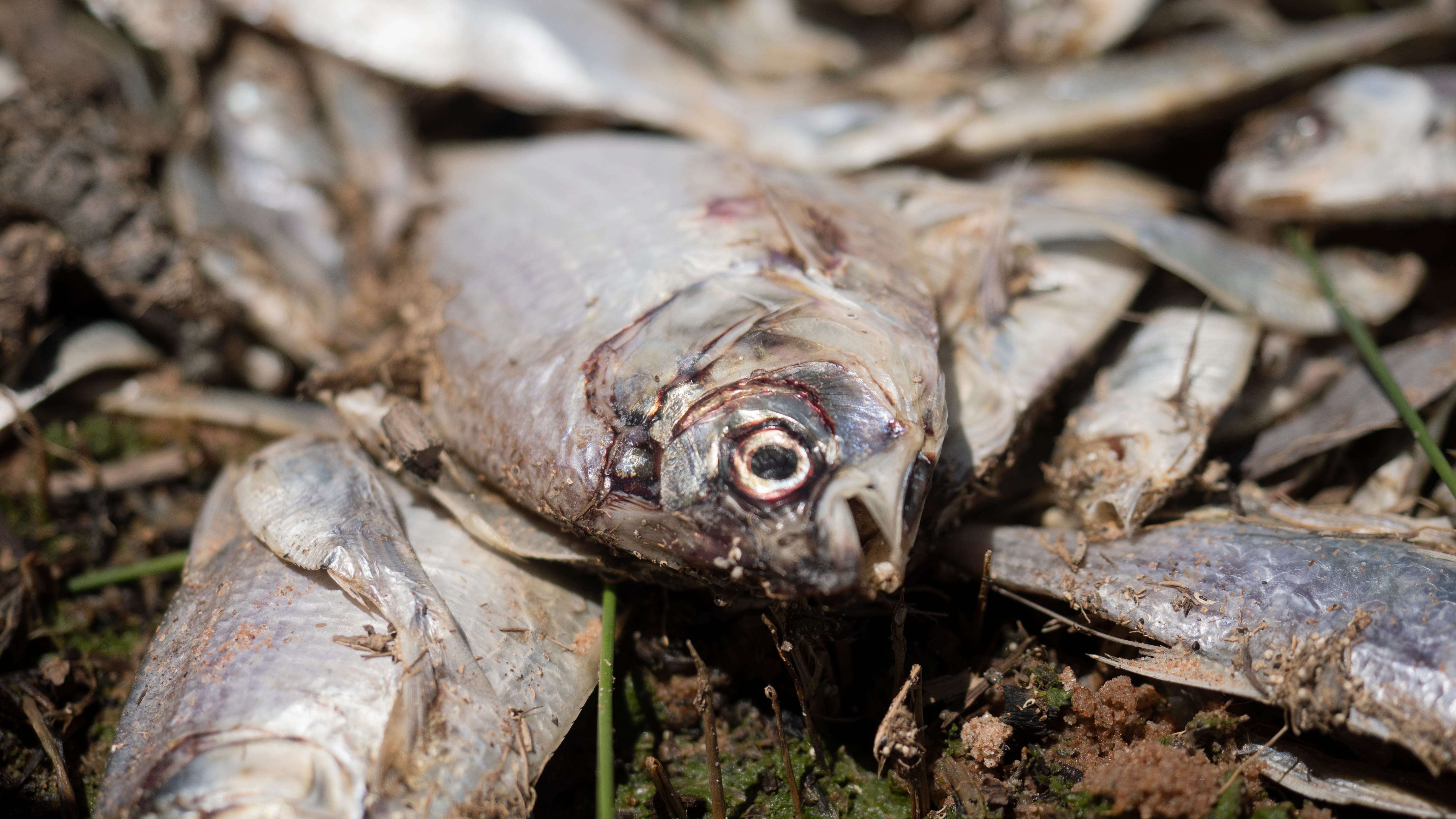
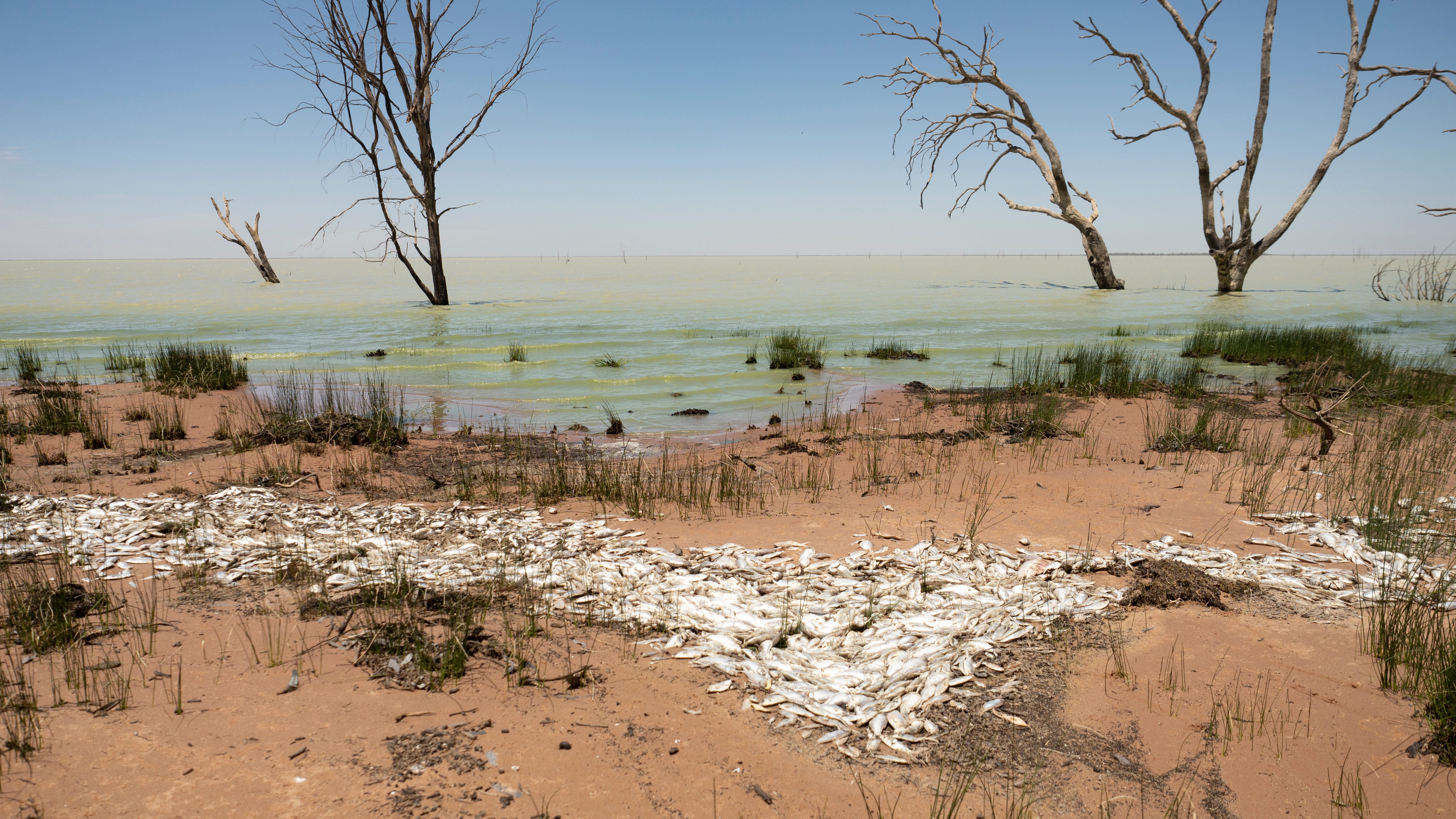
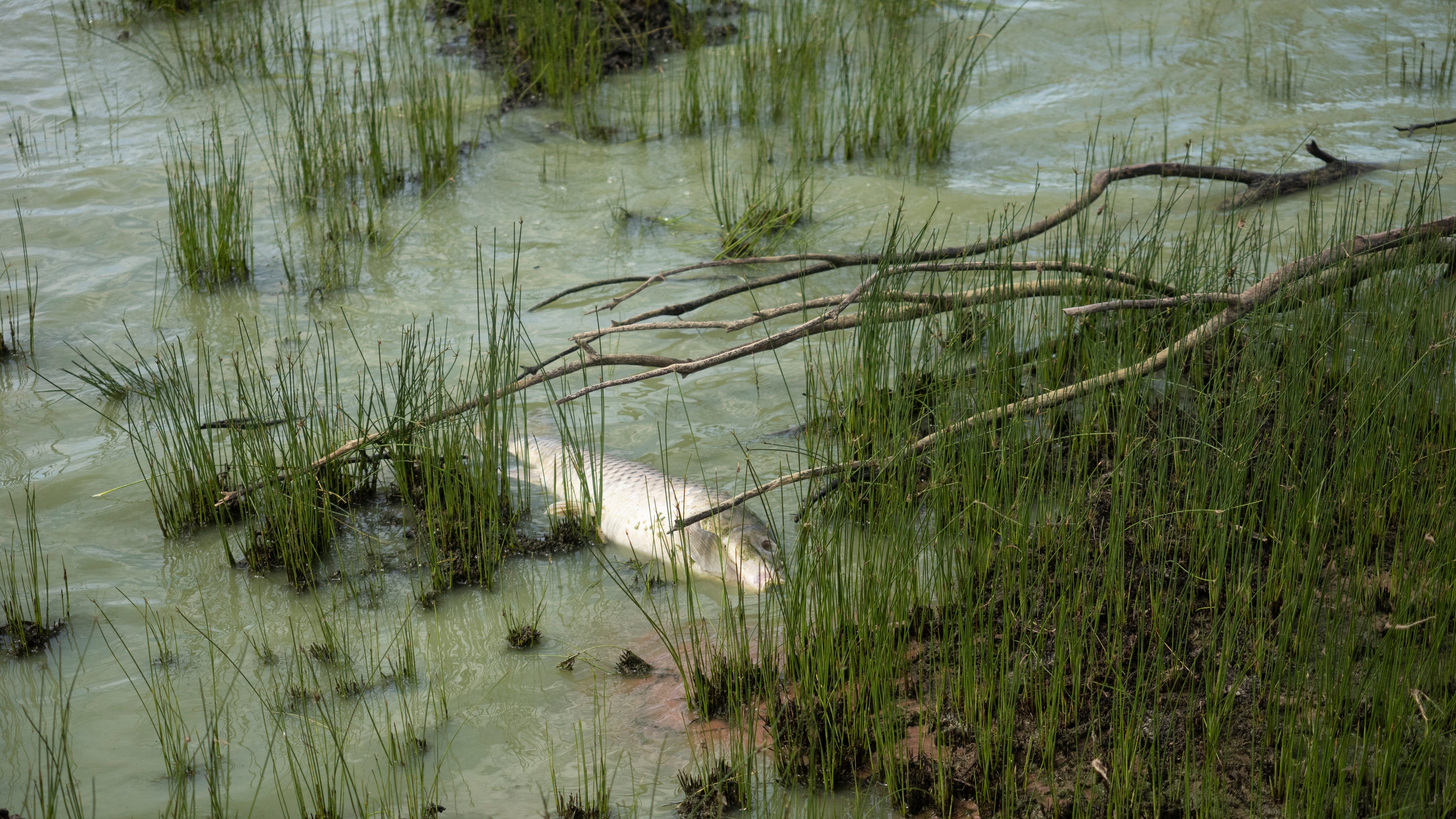
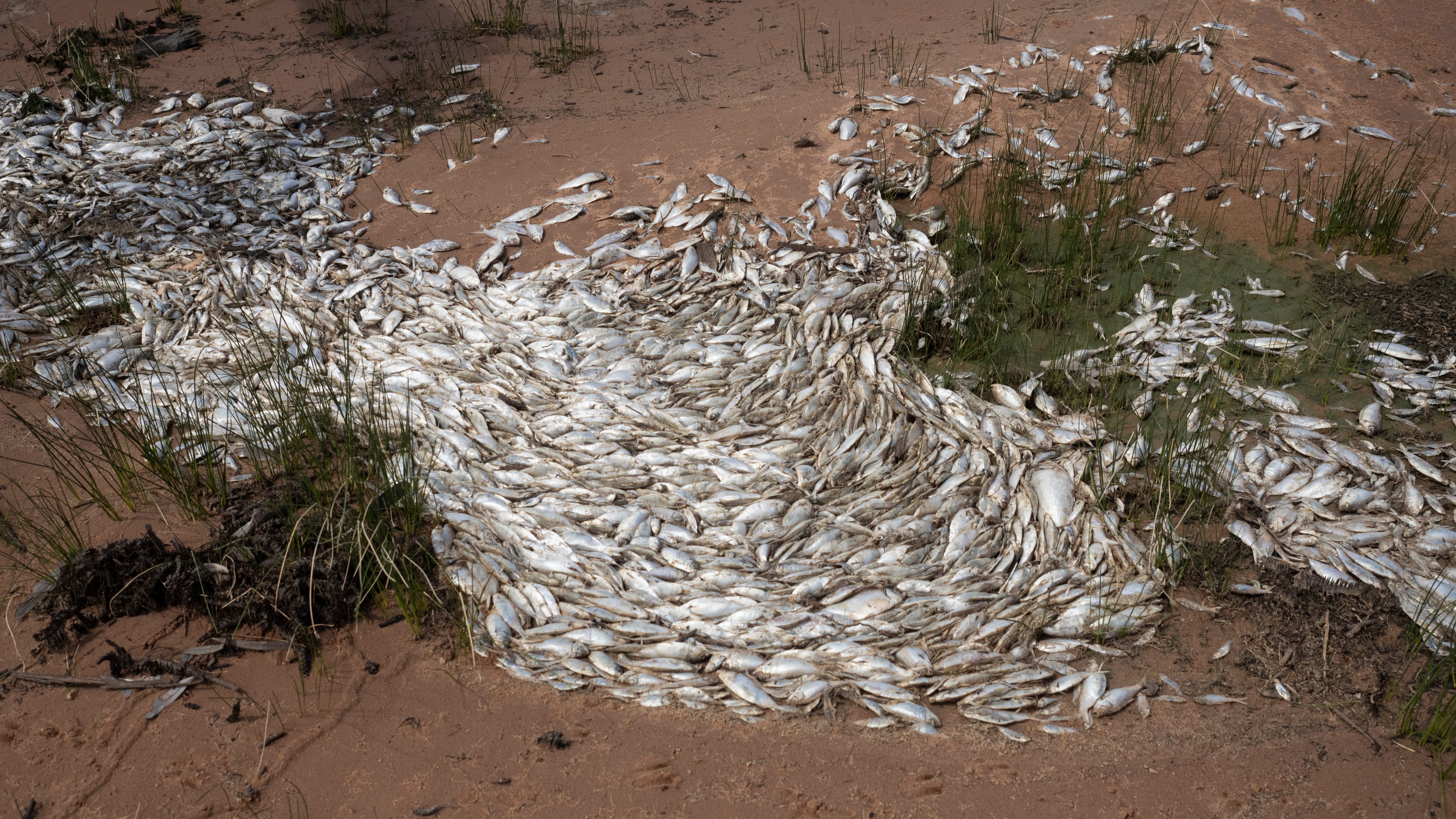
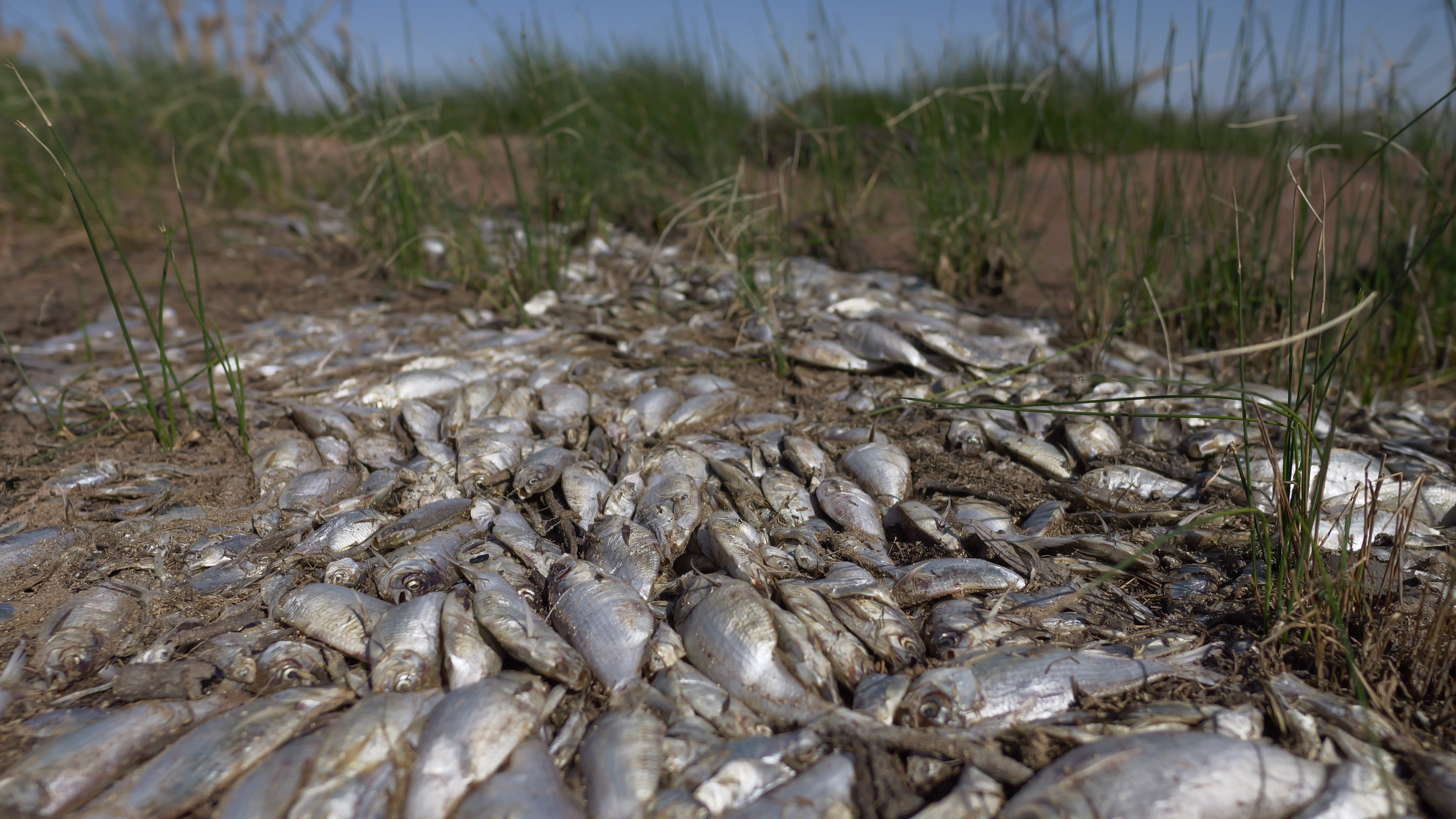
These little fish are one of the species that makes Menindee Lakes so abundant. When it floods, these fish breed up in huge numbers and are preyed upon by birds and fish alike. They are susceptible to changes in water quality and are the dominant fish in mass mortality events. This is why their deaths are frequently labelled as ‘natural’ because ‘naturally’ occurring events like blackwater or temperature changes are known to cause Bony deaths across the Basin. The kill found on Lake Menindee’s shores on the 2/3/2026 was estimated by locals to be over 100,000 Bonys. My distance to density calculator - steps multiplied by rough fish count per metre squared - came up with 100,000 conservatively.
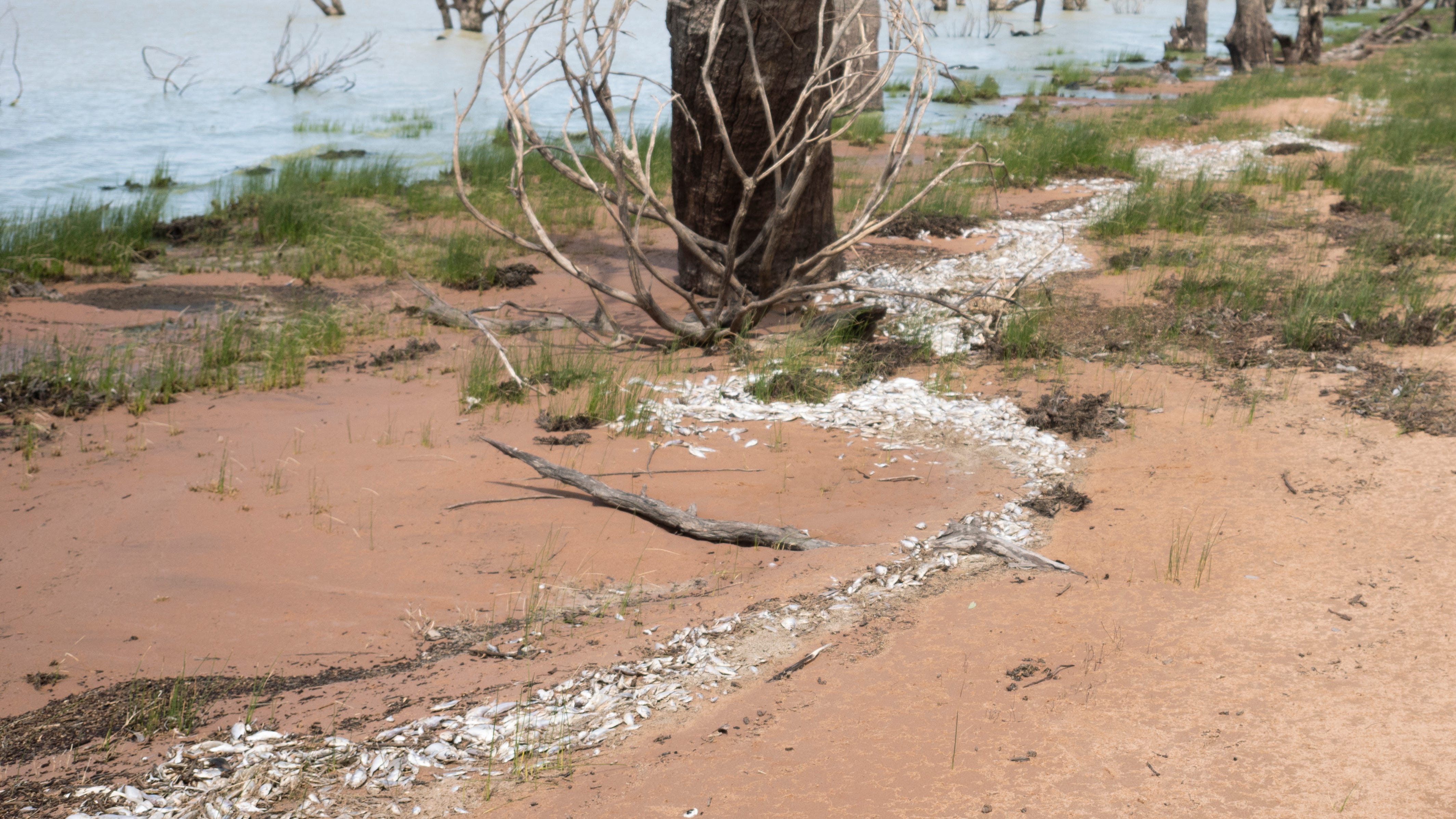
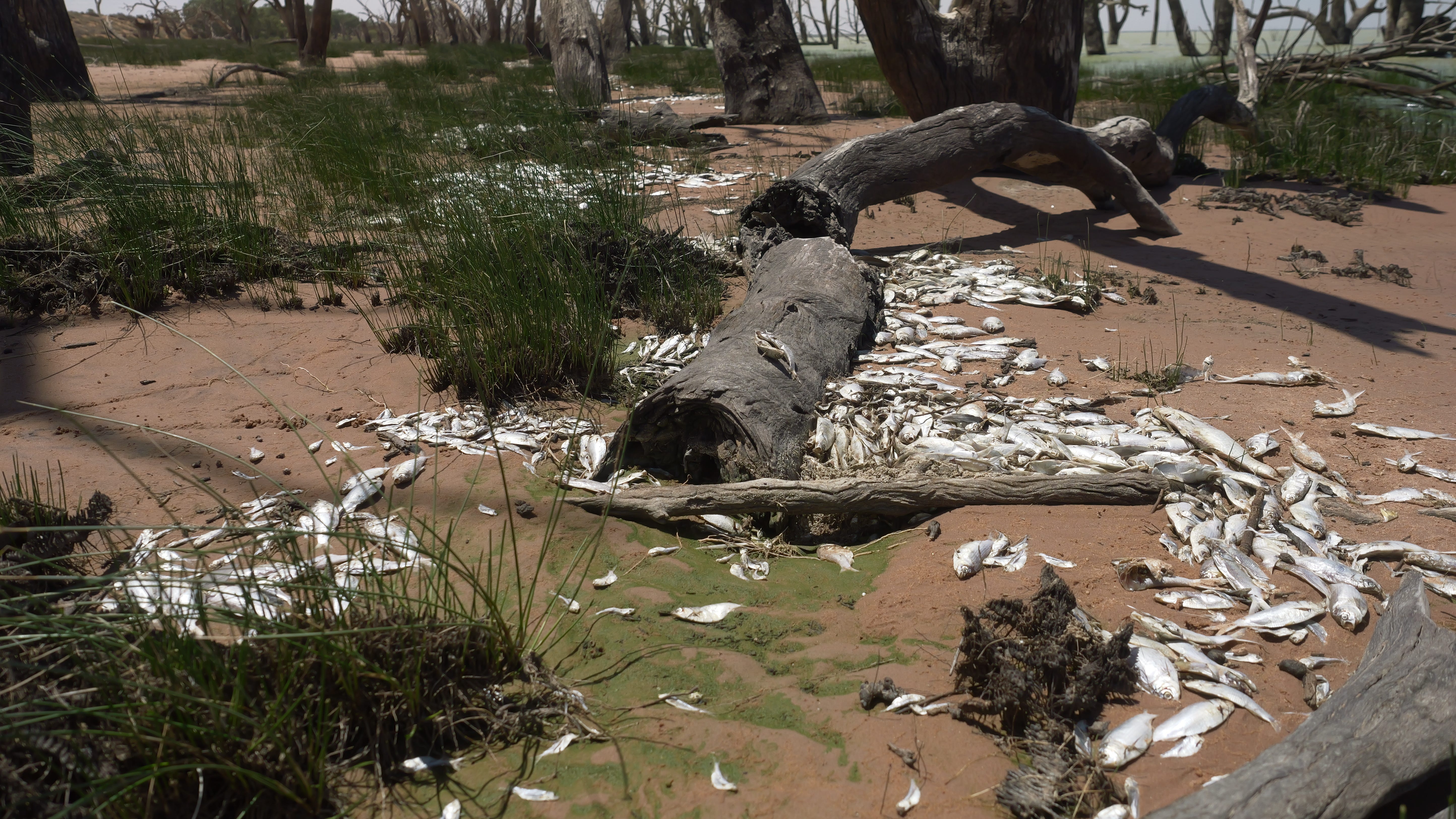
When I arrive at Sunset Strip I drive to the end of the village and begin the walk northward quickly finding the crumb trail of dead fish on the shoreline, beginning at the Strip’s clubhouse, and meandering among the trees and reeds.
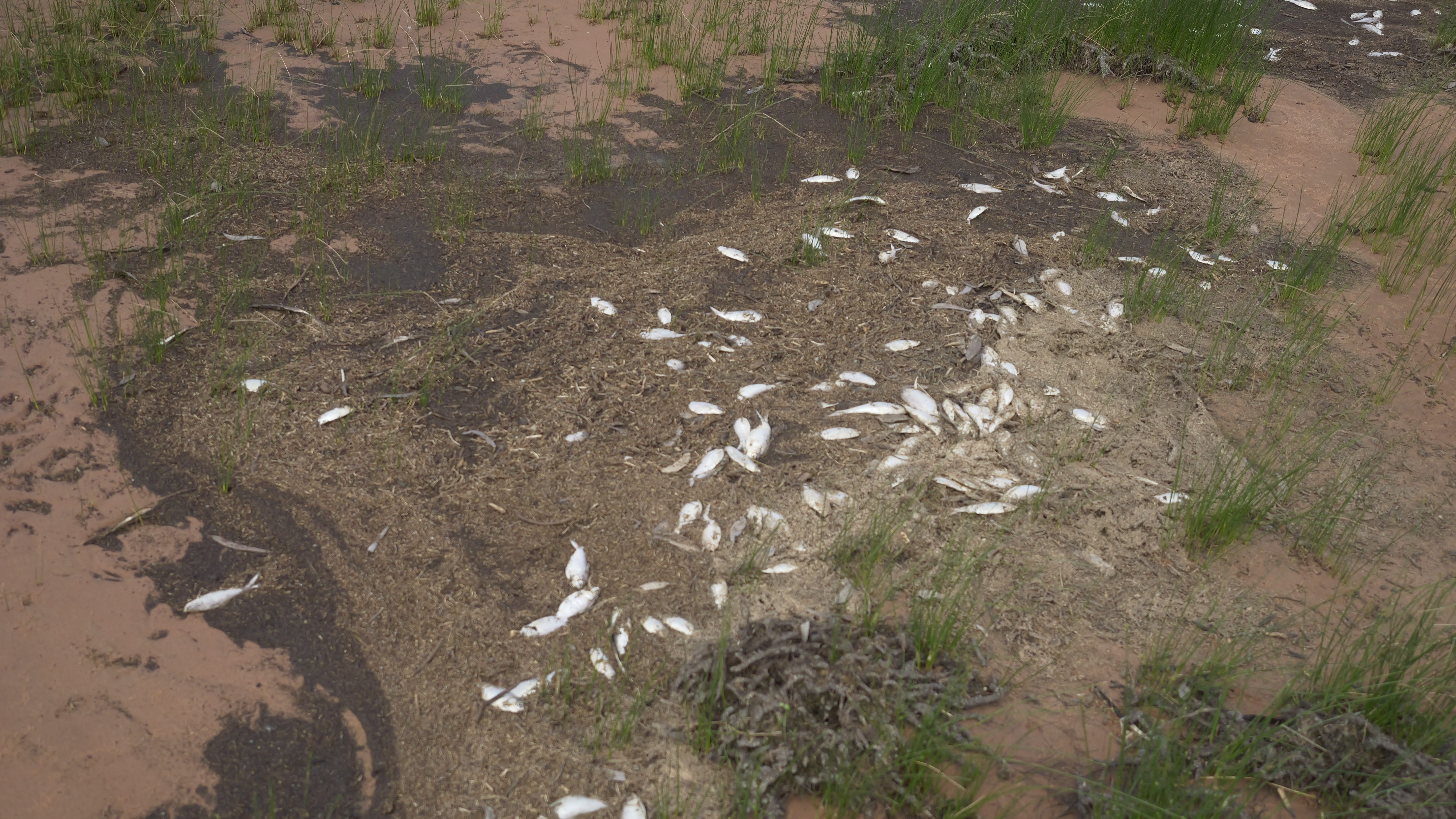
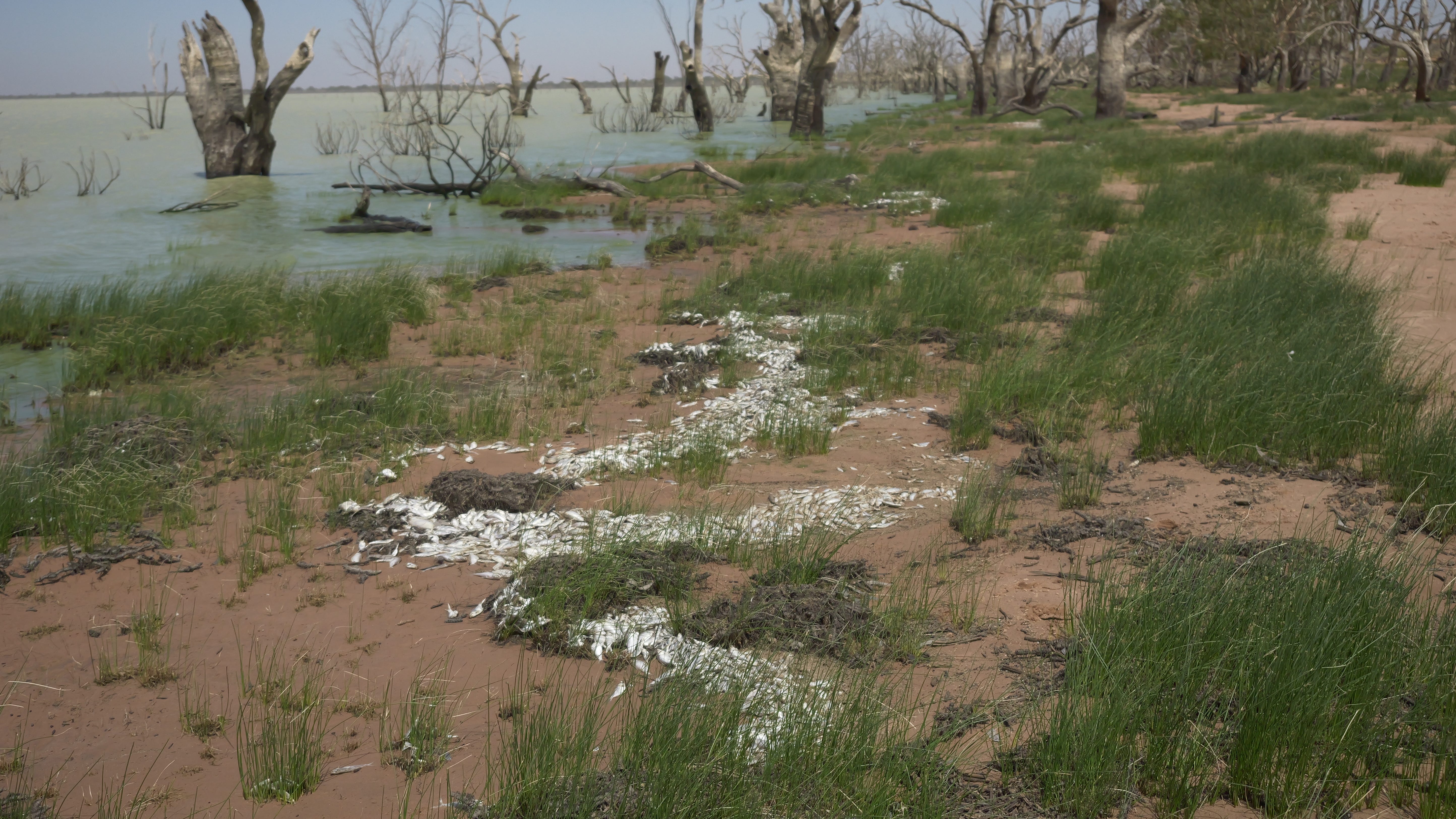
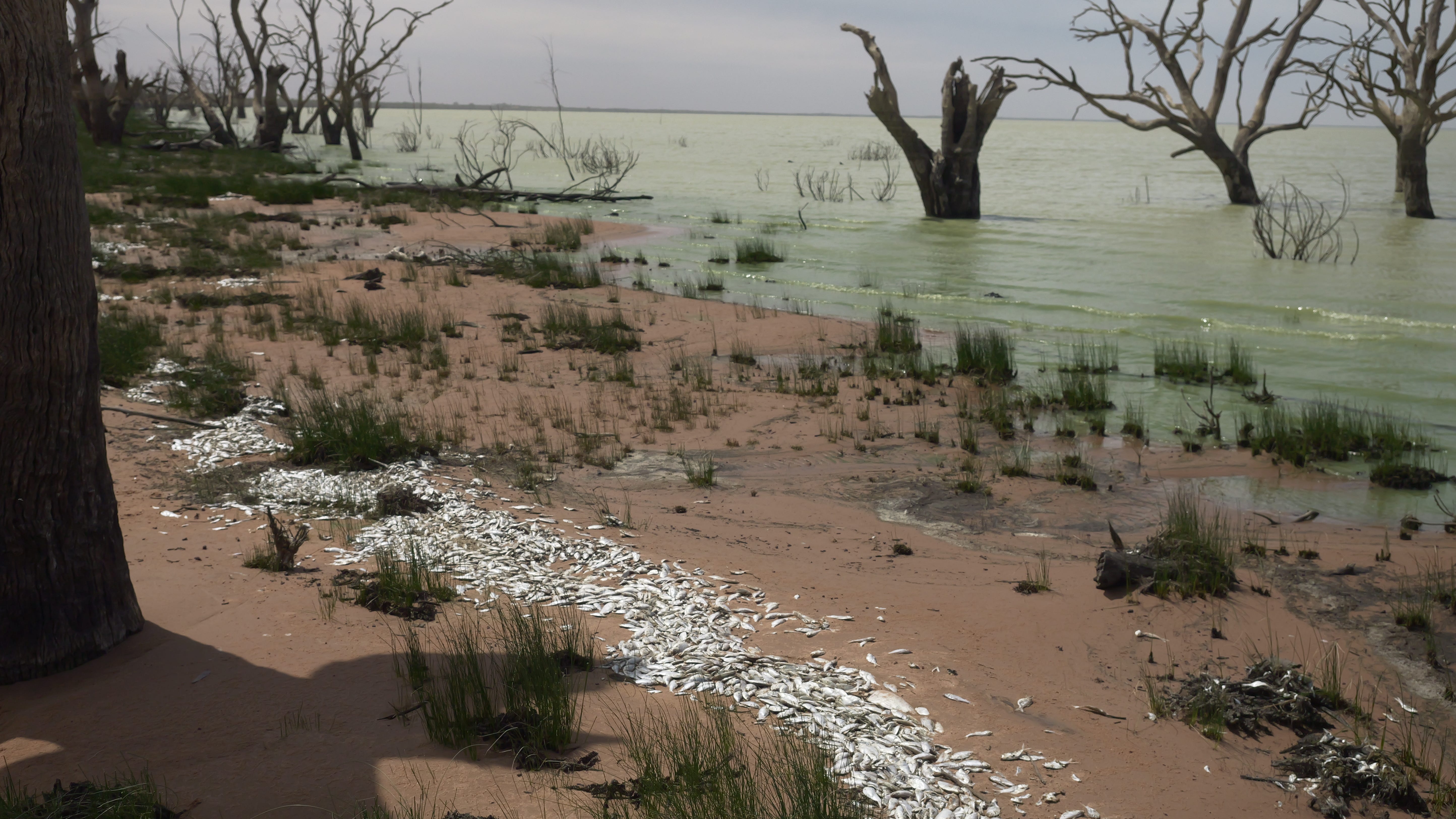
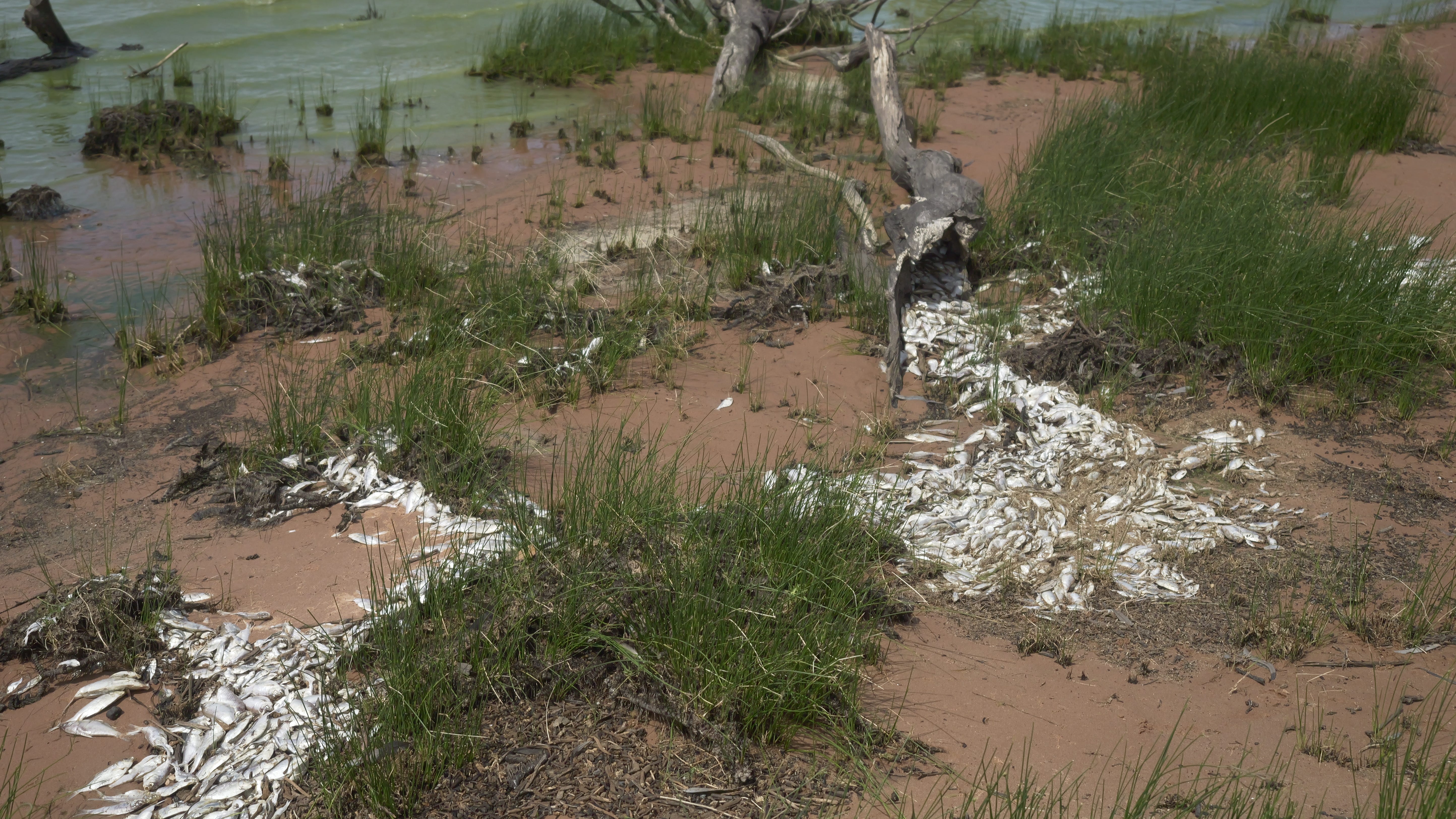
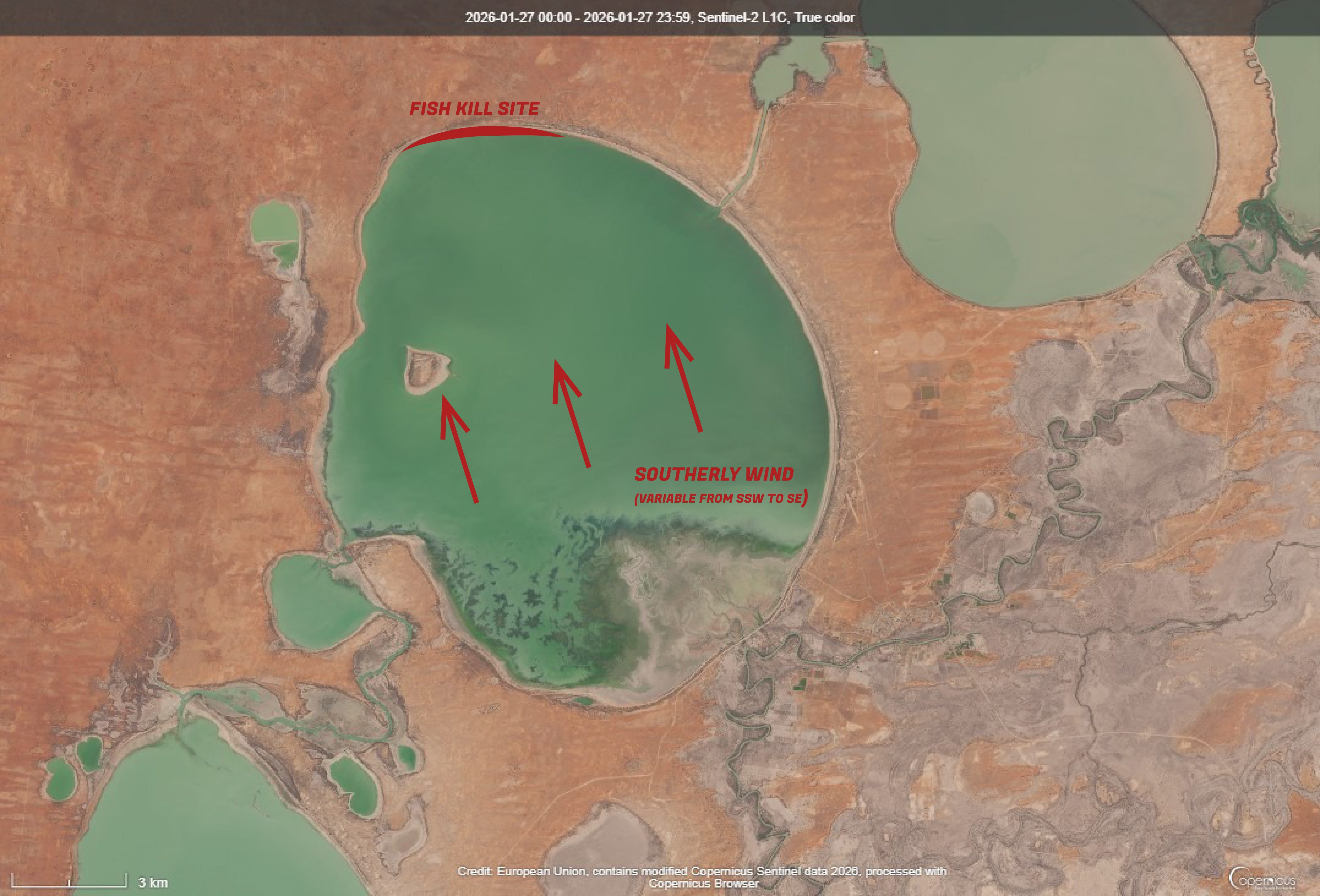
The line of fish is a good 2-3 metres from the waterline suggesting the water was up higher when they were deposited, likely through wave action from the southerly wind storm that occurred on Sunday.
This fish kill comes just after an unprecedented heatwave ravaged the region the week before, smashing temperature records across the continent, until it broke on Sunday Night. During the heat last week, fish were reported dying in their 100s in the Menindee Weir Pool.
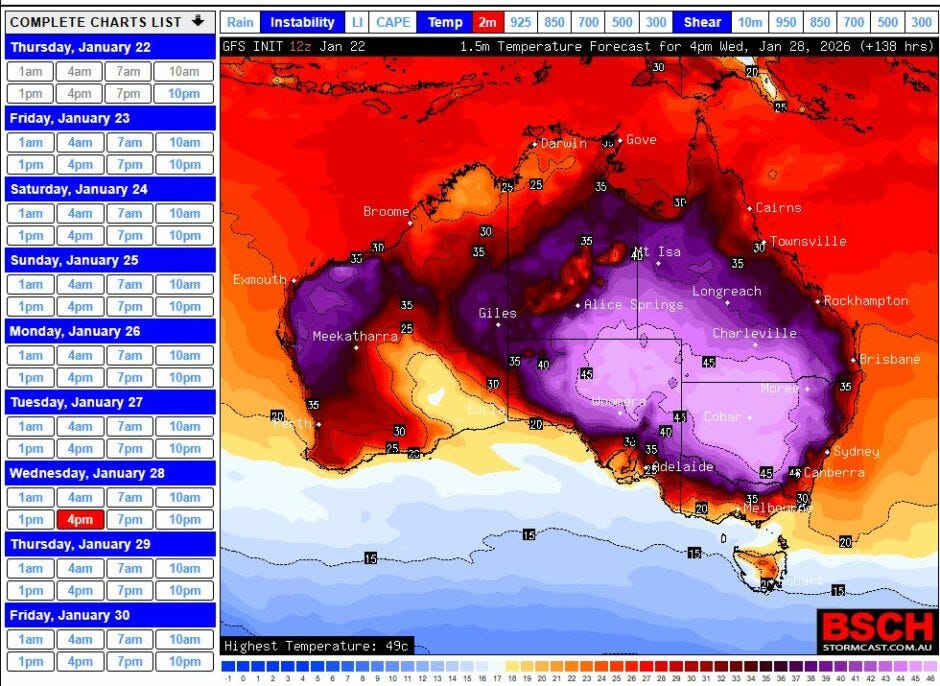
This heatwave was unlike anything a lot of long term residents had experienced. An older friend of mine who lives on the edge of Broken Hill remarked that while carrying water for animals on his property he could feel his body cooking in the heat. His backyard had become a highly dangerous place. Nothing is safe in temperatures above 48C. Not even ants could be seen scurrying for food and small birds stood no chance in the boiling temperatures. Young magpies we had seen raised up last year by their overprotective parents found a cool place under a tree and quietly died, weak and exhausted.
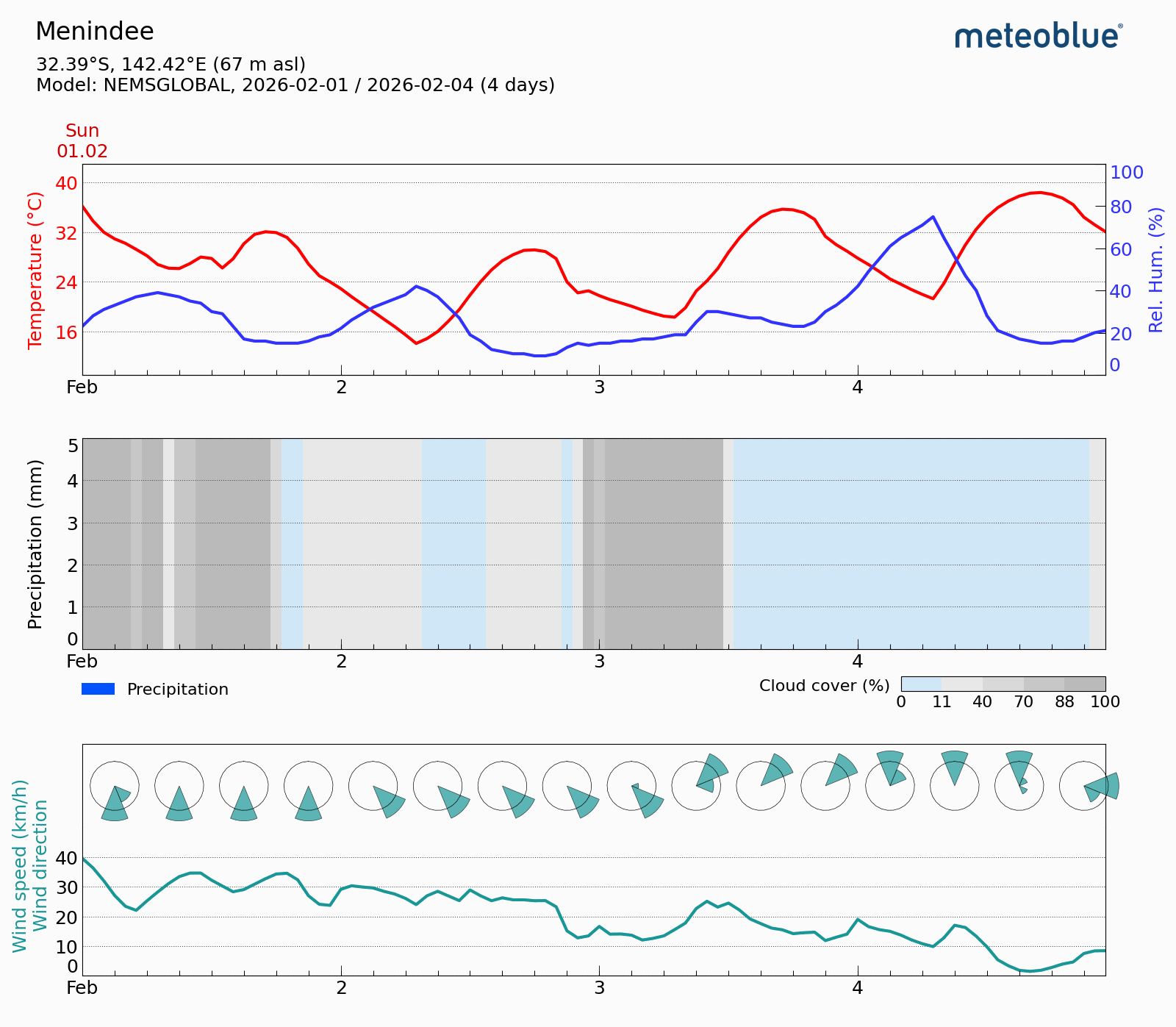
When the heatwave finally broke on Sunday night it brought with it a mammoth dust storm, followed by rain.
It is likely that the SW-SE winds that came with the cool change blew the dead fish onto the northern shore of lake Menindee from wherever they first died. This southerly wind also brought algae and debris from across the lake, pushing a green sludge up onto the beach at Sunset Strip.
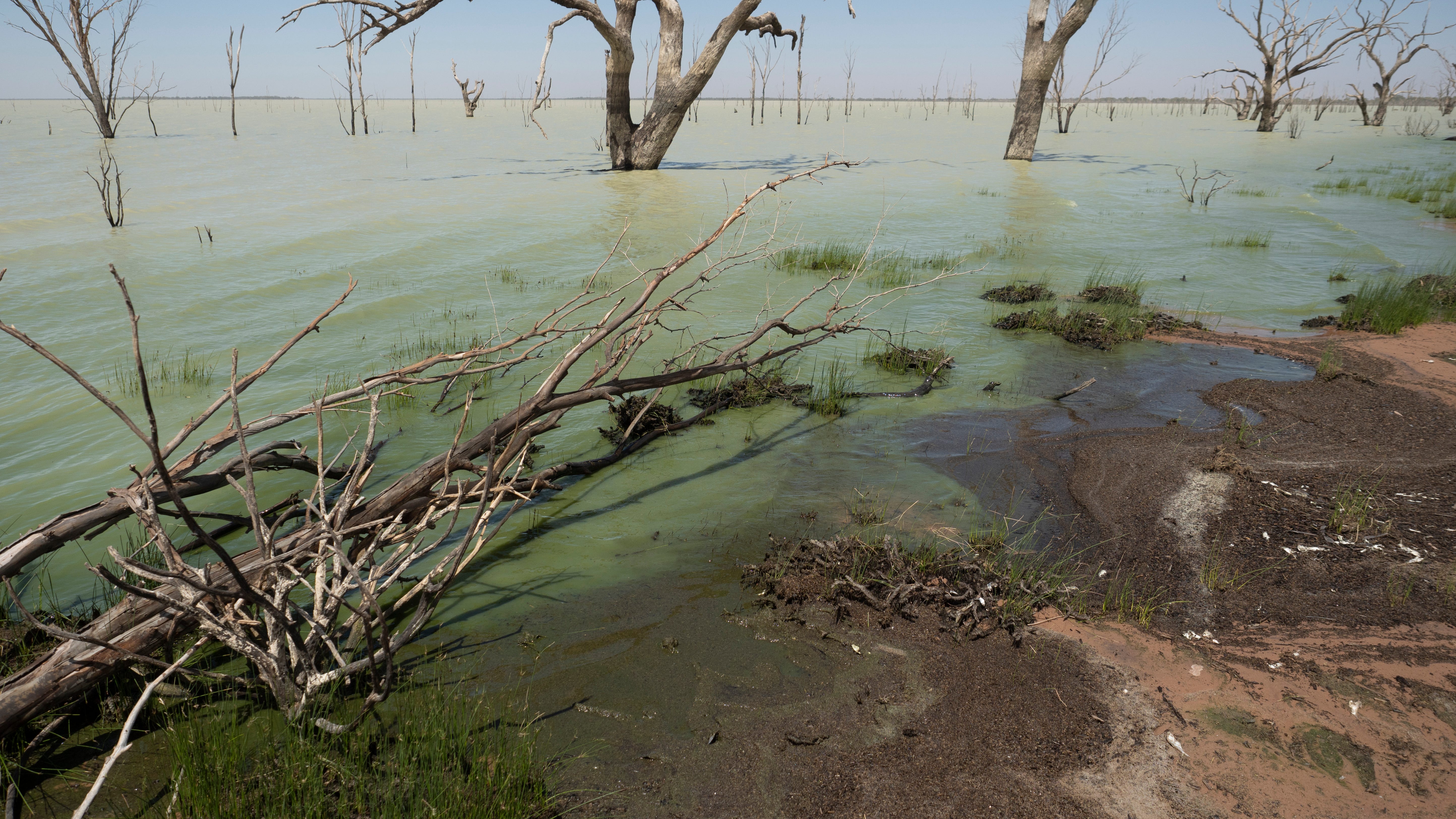
The band of green slime along the edge of the lake is phytoplankton or algae, tiny free-floating plant-like organisms that fix carbon and produce oxygen through photosynthesis. In the Baaka there are over a hundred genera of phytoplankton, some of which provide food and habitat for a bunch of different critters. They form the basis of the food web in many aquatic ecosystems.
A common species of toxic algae in this region is blue-green algae which is not actually an algae at all but a bacteria called cyanobacteria, which, like algae, produces energy through photosynthesis. Cyanobacteria is an organism that has caused fatalities of livestock, wildlife and pets, and has been linked to motor-neurons disease in humans. Only a week prior to the fish kill, WaterNSW issued a red alert for cyanobacteria (blue-green algae) in Lake Menindee, recorded on the south side of the Lake.
This green band of slime on the foreshore is phytoplankton deposited along with the dead fish, on the northern edge of Lake Menindee by Sunday’s wind storm.
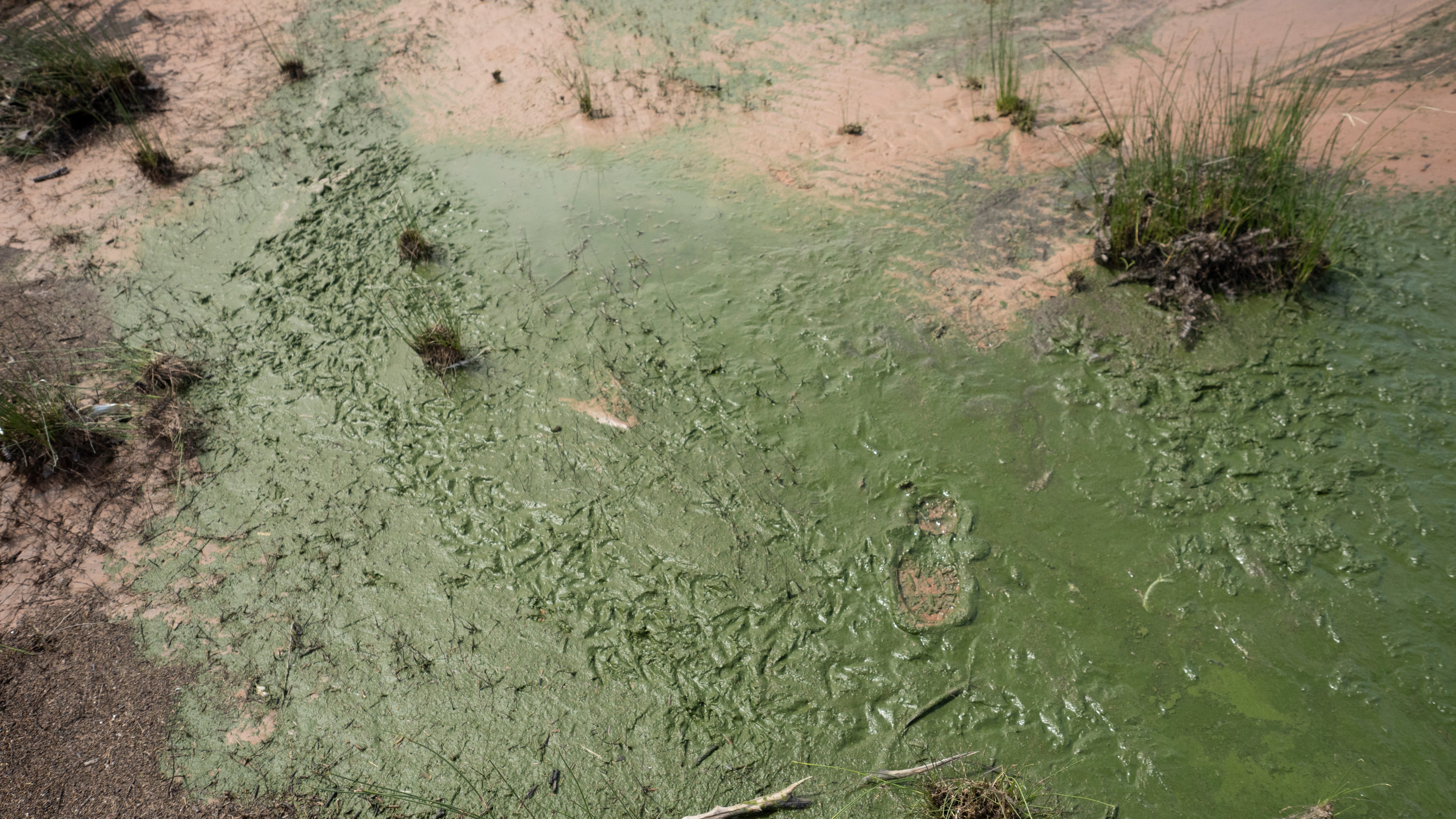
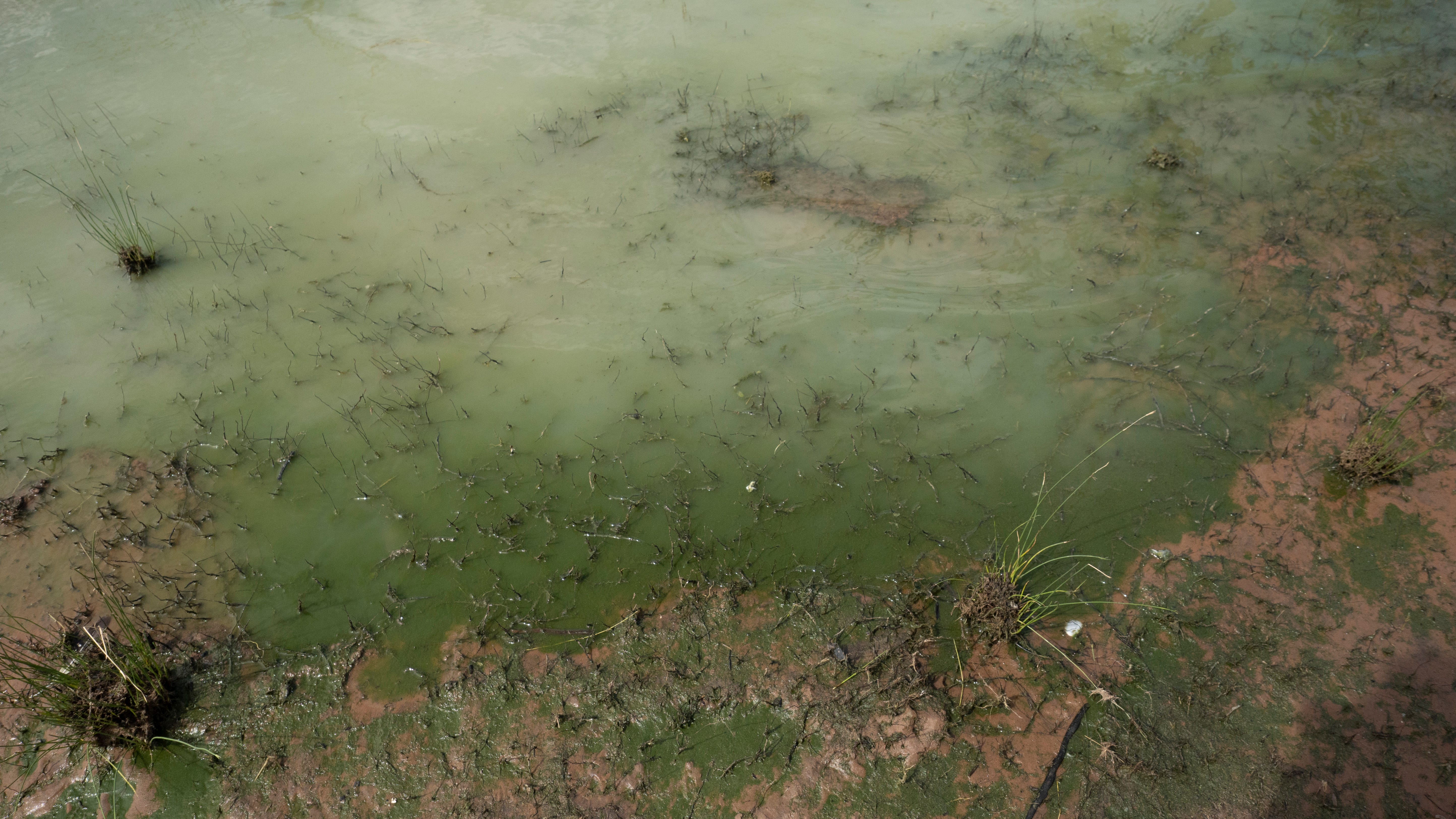
While some level of algae is a normal part of a healthy ecosystem, water quality at Menindee Lakes and in the Baaka-Darling River has been a major concern for decades, including the frequency and scale of toxic algae blooms. A recent study from NSW Department of Climate Change Energy Environment & Water (DCCEEW) has shown that water quality in the lower Darling Baaka River is persistently poor with elevated nutrient levels and high amounts of algal growth.
Many residents have told me that they don’t remember seeing blue-green algae at all in the river prior to the 1990s and many senior community members recall a time when the water in the river was “crystal blue clear” and water could be drunk straight from the river.
Since the mass fish deaths of 2023 water quality has been a key focus of water agencies, who have formed the Water Quality Working Group, and are managing the water quality in the Menindee Weir Pool by monitoring the oxygen levels and using ‘pulsed’ releases of water from the top most lakes to temporarily improve the oxygen levels, and thus avoid mass fish kills in the weir pool. Whether that has prevented a mass fish kill in the weir pool so far this summer or not, is an interesting and probably unanswerable question. The government has also constructed a temporary fishway and are looking to modify Main Weir to include a permanent fishway, ensuring fish aren’t besieged during future water quality extremes.
While walking the 3km of dead fish I come across a very sick crow at the water’s edge, staggering in circles, and unable to hold its head upright.
Somewhere along the foreshore, I find a dying crow. I wrangle the crow into my free hand once I’ve finished filming it, and place her under a tree near the Sunset Strip village to die a little more comfortably. I’ve never seen a bird behave like this, even after seeing them hit by cars. It could be a snake bite, but considering the bird was staggering along a shoreline of potentially toxic algae and dead fish, it would be silly to not assume its death is related.
Later that evening, I send the video to an ecologist who was involved with last year’s algae bloom on South Australia’s coastline, where thousands of marine creatures were killed by a toxic algae called Karenia Mikimotoi which bred up during a marine heatwave. She replies:
Yes, [the crow] has a neurotoxicity issue. If it is from the algae or if it is from botulism due to the rotting fish, is impossible to tell without capturing the animal while still live, killing it and doing tests for the two different toxins on its essential organs within an hour or two of death. Not an easy process.
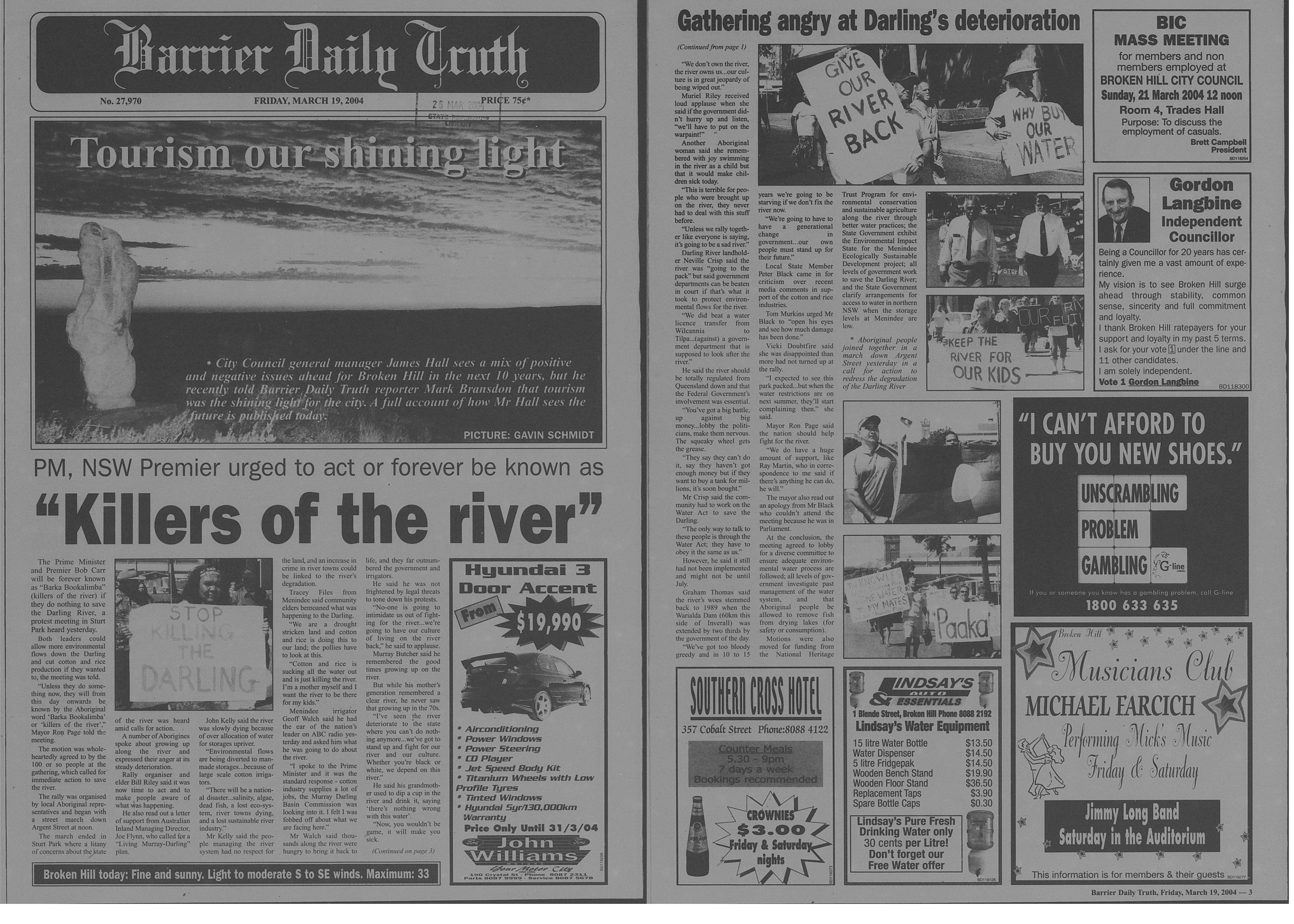
It’s always alarming to see dead stuff. It’s even more alarming when species disappear from a place altogether. Barkindji people have told me that catfish and Black Bream have disappeared from the Baaka: fishes that Barkindji once expertly caught in abundance along the river. I’ve only ever caught European Carp and Golden Perch in the Baaka. There are Murray Cod, I’ve seen others catch them. While still in this section of the Baaka, Murray Cod are under threat. Successive fish kills of Murray Cod during poor water quality events have had a disastrous impact on their populations. In 2004, locals found an estimated 1,000-5,000 Murray Cod dead along a 160km stretch of the river below Menindee, after a release of bad water into the river from Main Weir. The authors of a later investigation found that it would take 50 years for the cod population to recover its losses. 15 years later there was another mass cod death in the same area.
Freshwater mussels have also been found dead in enormous numbers. These shellfish were once a big part of people’s diet in this region. Nobody eats them anymore. I photographed piles of dead river mussels in early 2020, dehydrated by a river too dry for too long.
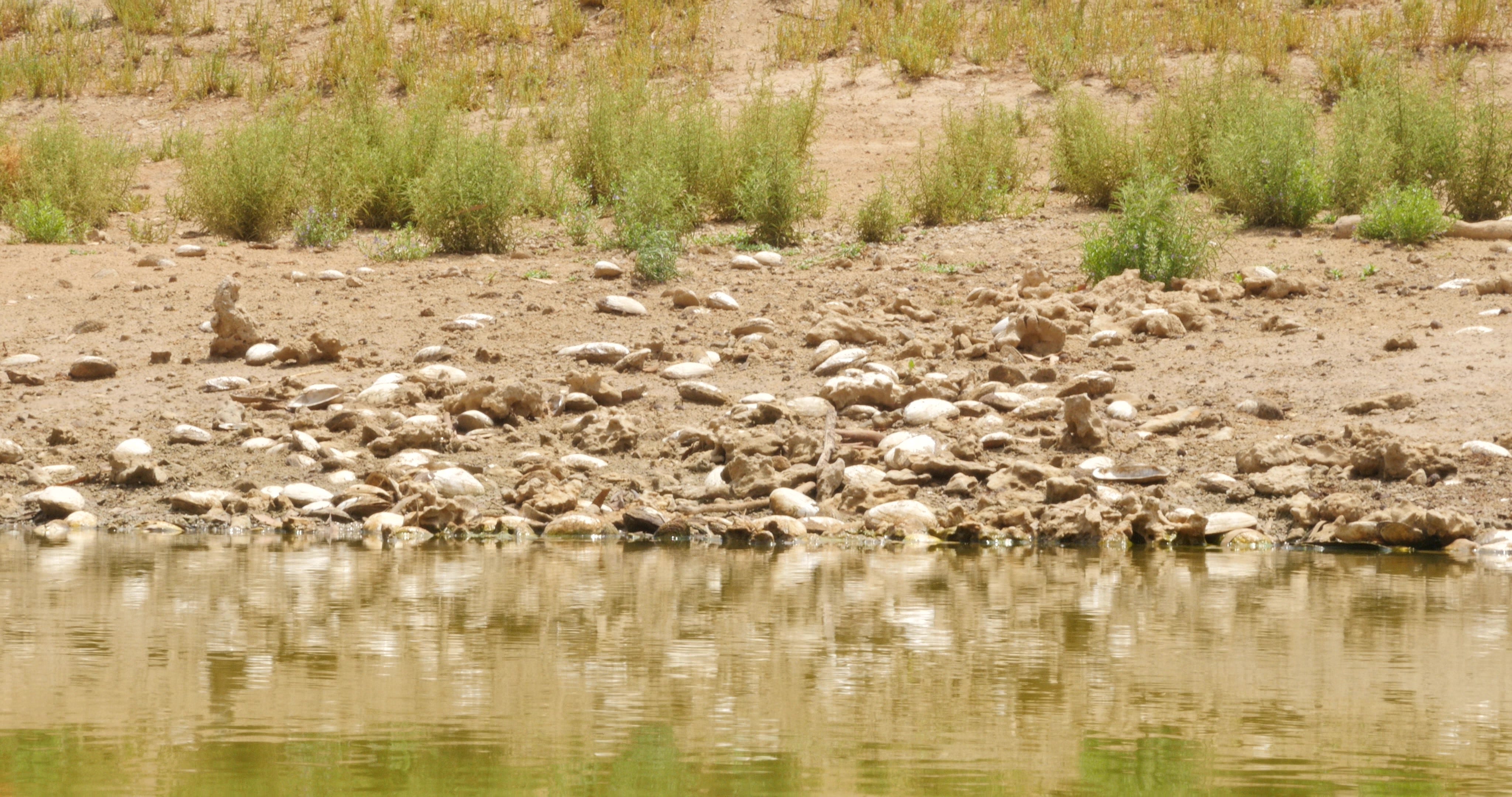
River mussels are filter feeders, removing seston, bacteria and algae from the water column while they feed, positively affecting water quality. The loss of river mussels during the 2017-2020 drought was significant and widespread across the northern Murray-Darling Basin, with some sites from a 2020 survey finding thousands of dead mussels and site mortality estimates of between 20-100% across the Northern Basin.
I can’t help but think losing the river mussels in 2017-2019 has made algae more abundant.
While heatwaves are common out here during summer, they are expected to get longer and deeper as global temperatures rage. Algae love the heat. They thrive in still and hot conditions, carrying the message of a warmer climate.
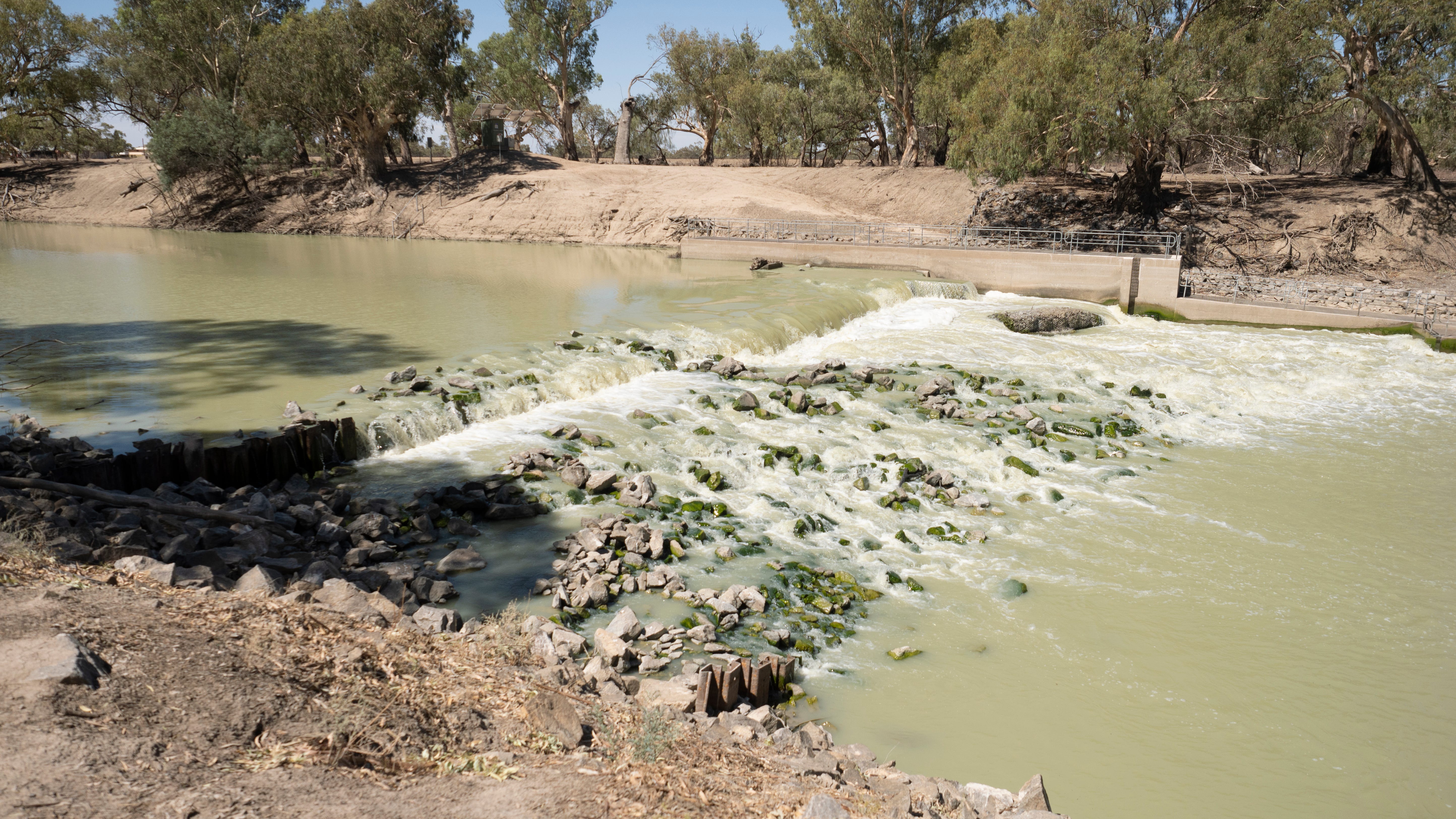
On the 27th of January at the tail end of the regions heatwave, the lake water is shown as a dark green colour.
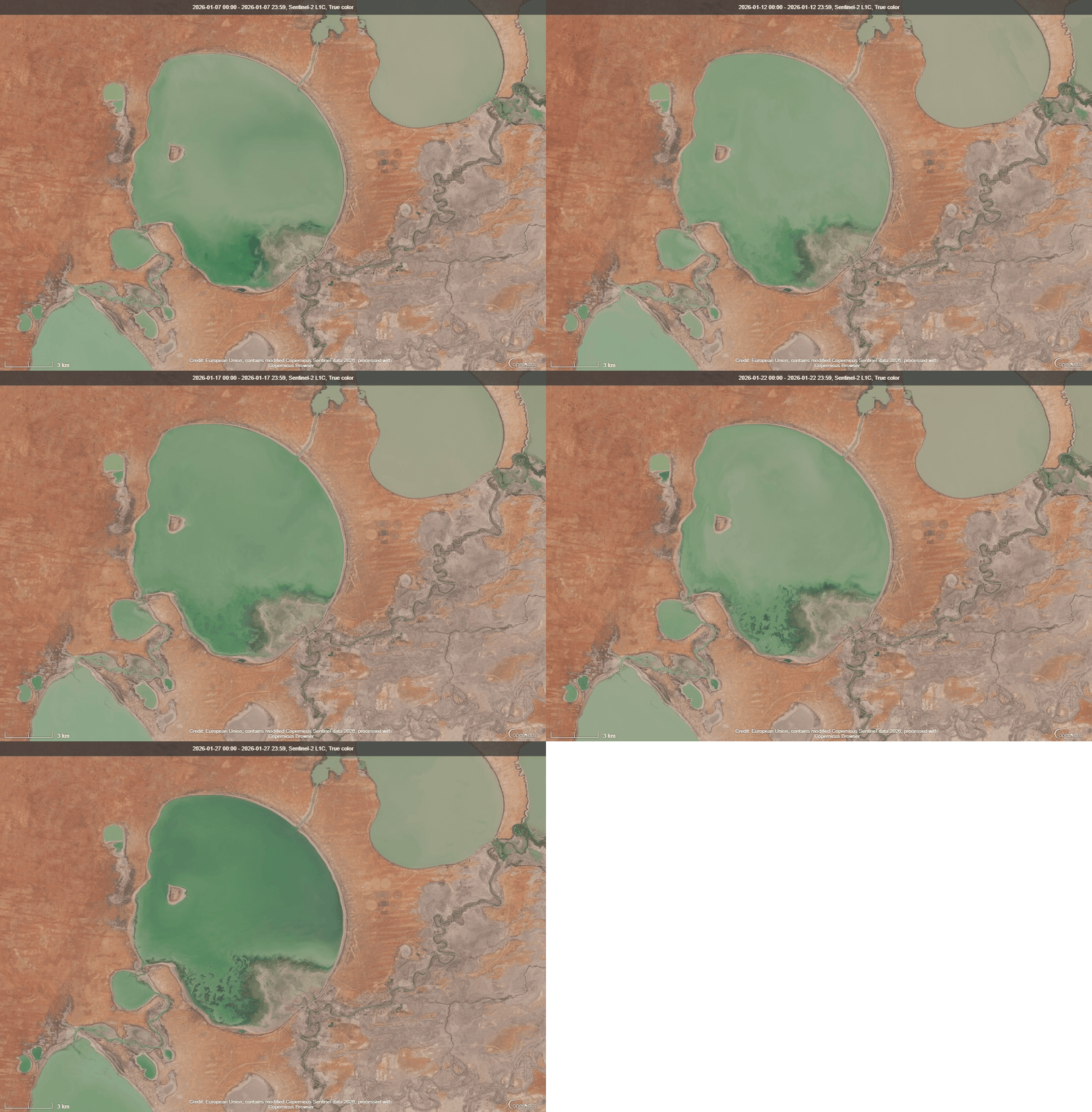
With the reality of a hotter and drier Basin under any future climate scenario, the abundance of harmful cyanobacteria (blue-green algae) in the Basin is only set to increase. While avoiding mass mortalities of fish is a high priority for river managers, and a sensible one, the ongoing and consistently poor water quality in the Baaka-Darling River is both an urgent and deeply structural problem, requiring restoration of natural flow regimes, eradication of pest species like European Carp, reintroduction of aquatic plants, reducing nutrient loads in the river, and addressing many other cumulative causes of water quality degradation.
But many past water reforms aimed at restoring Basin rivers have badly failed the Baaka-Darling River. Between the billions of European Carp in the basin, the powerful irrigation industry intent on maximising access to the Baaka’s flows, and human induced climate change, the factors affecting water quality are almost overwhelming.
Without serious action, water quality is going to continue to deteriorate, and so too the health of native fish populations, including through mass death events like this one. There are lots of important discussions happening this year about how to better manage the Murray-Darling Basin. It’s going to be a big year.
During the days I sit down to write this, the Barkindji River Rangers and the Central Darling Shire Council are cleaning up the dead fish. A hot and unpleasant job.
As I walk the 3km line of dead Bony Bream on the shoreline of Lake Menindee, it is peaceful and perfectly still. Two dozen kangaroos, wary of the stranger with the camera, hop ahead of me, and I wonder what they think of the sight and smell of death on their shores.
This is just so sad to see....Thanks for sharing Dan.
Thank you Dan. I am very upset but so grateful to have your incredible reportage.